

Why your teenager might need picture books more than your toddler
If your 12-year-old still loves picture books, you might wonder if that’s okay.
It’s not just okay. It’s BRILLIANT. And neuroscience backs this up.
Your Brain on Picture Books (At Any Age)
According to brain imaging research, when anyone (toddler, teen, or adult) reads a picture book, multiple brain regions activate simultaneously:
- Visual cortex: Processing illustrations
- Language center: Decoding text
- Emotional center: Connecting to characters
- Memory formation: Linking images to words
- Creative zones: Imagining beyond the page
That’s five brain regions having a party. Compare that to scrolling social media (two regions, barely awake) and you’ll see why picture books are neurological goldmines at any age.
The Gift That Grows With Them
Emotional Processing Without Pressure: Research in adolescent psychology shows that teens can explore feelings through picture books without the commitment of a novel. It’s emotional training wheels that don’t feel babyish.
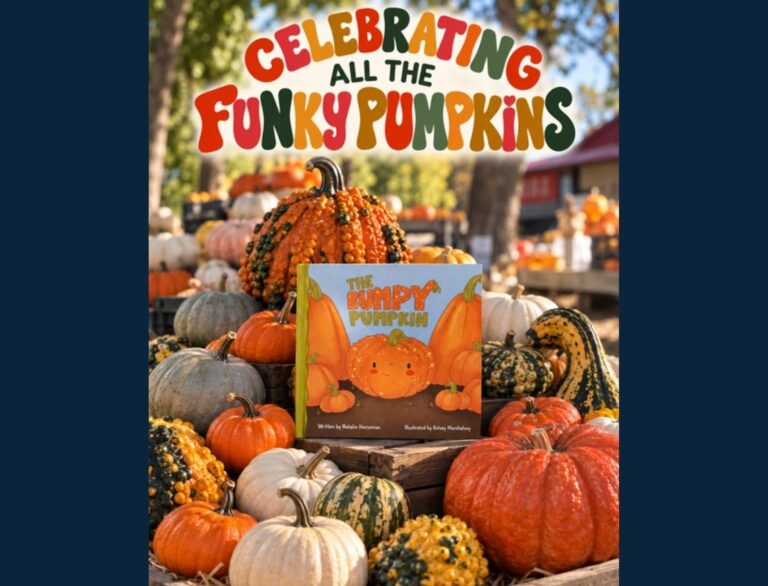
A middle school counselor shared that she uses “The Bumpy Pumpkin” with eighth graders. “They’d roll their eyes at a feelings worksheet,” she said, “but they’ll discuss a pumpkin’s emotions for twenty minutes straight.”
Visual Literacy in a Visual World: Kids today need to decode images, videos, infographics, and visual information constantly. Picture books teach visual narrative skills that transfer to everything from understanding data to creating presentations.
Stress Reduction That Works: Studies from the Journal of Applied School Psychology measuring cortisol (stress hormone) show that picture books reduce stress in readers of ALL ages. For anxious teens, a picture book offers calm without feeling patronizing.
Complex Themes, Accessible Packages: Modern picture books tackle everything:
- The Heart and the Bottle deals with grief
- Julian is a Mermaid explores identity
- The Day War Came addresses refugee experiences
- The Invisible Boy discusses social isolation
These aren’t dumbed down. They’re distilled down. Big difference.
The Teenager Secret
Teens are buying picture books. For themselves. Barnes & Noble reports picture book sales to ages 13-17 have increased significantly.
Why? One teen shared: “I can read a picture book in ten minutes between homework. It’s like a emotional reset button.”
Another said: “Sometimes I need a story but don’t have energy for 300 pages.”
The “Too Old” Myth Buster
C.S. Lewis said: “A children’s story that can only be enjoyed by children is not a good children’s story.”
Picture books that last speak to universal human experiences:
- Feeling different (every teenager ever)
- Searching for belonging (hello, high school)
- Facing fears (tests, relationships, future)
- Finding courage (daily requirement for teens)
- Celebrating uniqueness (when everything screams conform)
These themes don’t expire at age 8. If anything, they intensify at 14.
The College Connection
Universities are using picture books:
- Psychology courses analyzing emotional themes
- Education majors learning to teach complex concepts
- Art students studying illustration techniques
- Literature classes examining economy of language
Harvard’s Education department has an entire course on picture book narratives. If Harvard thinks picture books have value for adults, maybe we can stop age-shaming them?
Permission Slips for Parents
Your 10-year-old wants a picture book? Get it. Your teen picks up their old favorite? Beautiful. Your high schooler asks for The Bumpy Pumpkin? They’re processing something important. You want to read picture books yourself? DO IT.
The Bridge Builder
Picture books bridge gaps:
- Between childhood and adolescence (when you’re neither)
- Between cultures and experiences (visual storytelling crosses barriers)
- Between generations (everyone can access them)
- Between reluctant readers and loving books (less intimidating entry point)
- Between complex emotions and understanding (simplified but not simple)
My Challenge to You
This week, share a picture book with someone “too old” for picture books. Watch what happens. Watch walls come down. Watch conversations start. Watch stress decrease. Watch connection bloom.
Then tell me picture books are just for babies.
(Spoiler: You won’t be able to.)
The truth? We never outgrow our need for stories that combine words and pictures to help us understand the world. We just get embarrassed about it.
Time to get over that embarrassment. Your teenager’s mental health might thank you.
Next Post: How to Answer “What’s This Book About?” (When Kids Ask the Deep Questions)
 Our Book Launch Party at Spring Haven Farm
  Do You Love Funky Pumpkins?