Why every child deserves to see their family in a book, and how animal stories became the perfect way to show it
Every child deserves to open a book and see their family looking back at them.
That sentence is simple. The reality of making it happen is harder than it should be. And it is the reason In the Wide, Wild World exists.
What the Book Is
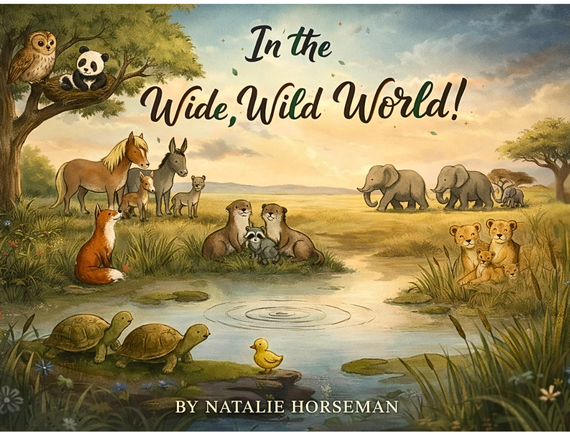
In the Wide, Wild World is a rhyming picture book that moves through the animal kingdom to show children what has always been true: families come in every shape, every size, every beautiful configuration, and all of them are held together by the same thing. Love.
Two lion moms raise their cubs with fierce devotion. Penguin dads nurture their chick through every challenge. A raccoon finds her place and her people with a family of otters, different in every visible way and belonging completely.
Each page of this book says something that every child needs to hear: families are not defined by sameness. They are defined by connection, care, and the choice to show up for one another.
Why Animal Families
I made a deliberate choice to tell this story through animals, and it was not accidental.
Animals have a wonderful way of creating emotional access without defensiveness. A child who might feel self-conscious seeing their own family structure named explicitly can instead watch a raccoon and a family of otters and feel something true without feeling examined. The distance of the animal story becomes an invitation, not a barrier.
My nursing background taught me a version of this truth early. Children often process difficult or complex emotions most freely when they are talking about a character rather than themselves. Animal families in picture books have always done important emotional work for this reason. They hold big human realities gently enough that young readers can approach them without armor.
The Families This Book Is For
In the Wide, Wild World is for the child with two moms who has never seen that reflected in a bedtime story. It is for the child who was adopted and wonders, sometimes quietly, where they belong. It is for children in blended families navigating what family means when it expands and shifts. It is for the child being raised by grandparents, by a single parent, by aunts and uncles who showed up when it mattered.
It is also for every child whose family looks exactly like what most books already show, because those children grow up in a world full of families that look different from theirs, and they deserve stories that reflect that too.
Inclusion is not only for the children who need to be included. It is for all of them.
Why Rhyme for This Particular Story
I chose rhyme for this book with intention. Rhythm creates a kind of safety in the body before the mind has processed the meaning. When language lands with a predictable, comforting beat, children relax into it. They are open. And when children are open, they receive.
A message about belonging, delivered in lyrical, repeating language, does not feel like a lesson. It feels like a lullaby. It settles into a child not as information but as feeling, and that is exactly where it needs to live to do its real work.
I have seen in my nursing career what it means to a child to feel that the world was made with them in mind. I have also seen what it costs when they feel invisible. This book was written to close that gap, one page at a time.
For the Adults Who Will Read It
If you are a parent, teacher, librarian, or caregiver looking for a book that opens conversations about family without making those conversations feel forced or heavy, this is that book.
The language is warm and accessible. The imagery is animal-based, which keeps things playful. And the emotional current running through every page is simple enough for a three-year-old to feel and layered enough to hold space for an eight-year-old who is old enough to think about what it means.
For the educators using it as part of social-emotional learning: the themes of belonging, identity, and unconditional love align naturally with the kinds of conversations classrooms are built to support.
How This Fits Into the Larger Body of Work
If you have followed my books for a while, you know that the thread running through all of them is belonging. The bumpy pumpkin finds the person who loves exactly what makes it different. Scout finds his way through disappointment and back to his people. In the Wide, Wild World is the most direct I have ever been about that theme, because belonging within a family is the most foundational form it takes.
Before a child learns to belong in a classroom, in a friendship, in a community, they learn it at home. Or they learn that they do not. This book is a small contribution toward making sure more children learn the first thing.
In the Wide, Wild World arrives this summer. I cannot wait to put it into your hands, and I cannot wait for it to find the children and families who have been waiting for exactly this story.
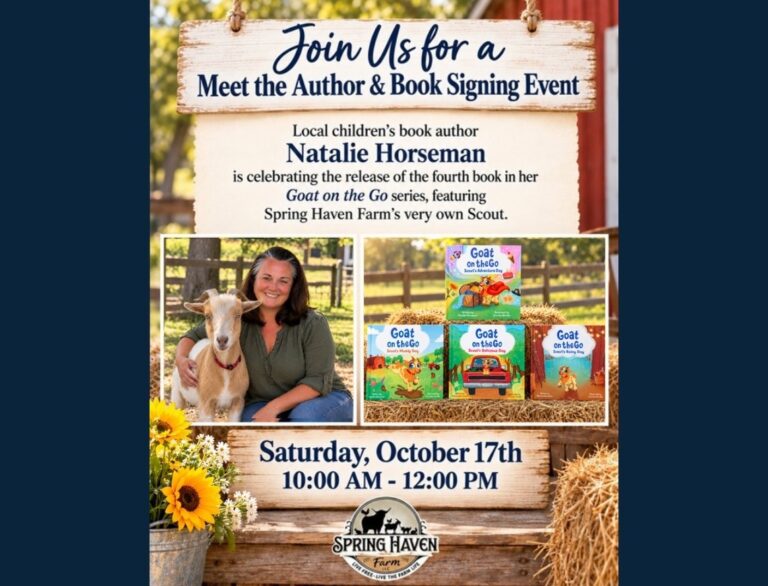 Our Book Launch Party at Spring Haven Farm
 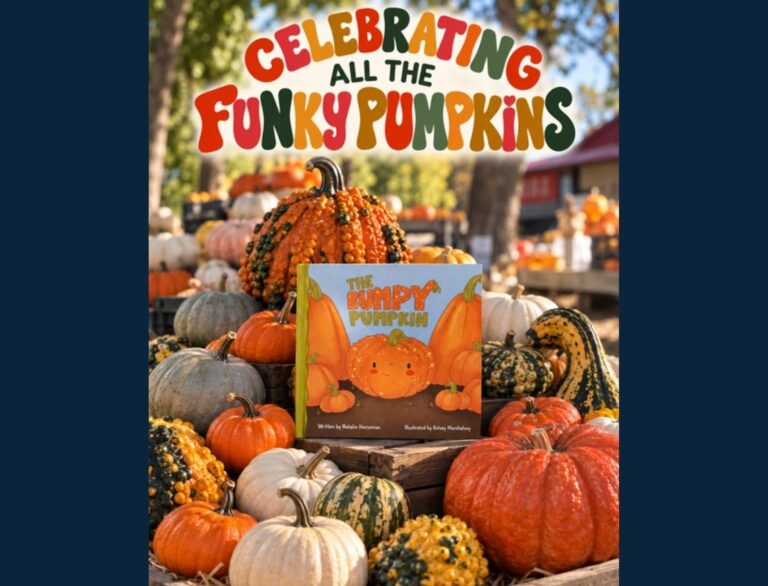 Do You Love Funky Pumpkins?