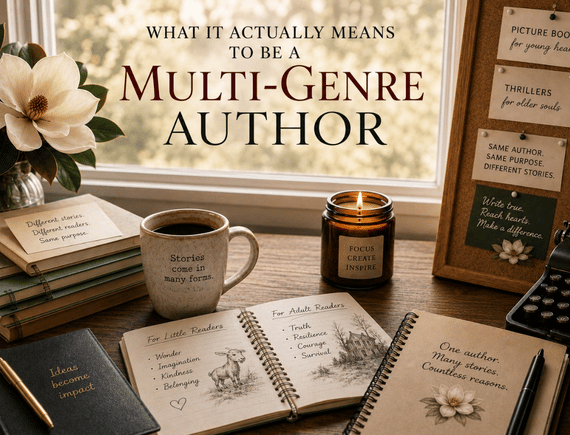
Writing for toddlers and adults in the same season, and why that is a strength rather than a problem
People are kind, but I can see the question forming before they ask it. How can the same person write a sweet picture book about a goat and a dark thriller about a woman fighting for her own sanity? The honest answer is that being a multi-genre author is not a contradiction. It is simply what happens when you let yourself write everything you actually carry.
The Myth of the Single Lane
There is a common belief in publishing that an author should pick one lane and stay in it. One genre, one audience, one tidy brand. The logic makes sense from a marketing standpoint. It is easier to describe an author who only does one thing.
The trouble is that very few people are only one thing. I am a nurse and a writer. I am someone who finds joy in a rhyming story about families and someone who is drawn to the shadowed corners of southern gothic fiction. Forcing all of that into a single lane would mean leaving most of myself on the side of the road.
What Multi-Genre Really Means
Being a multi-genre author does not mean being scattered. It means recognizing that different stories need different forms. A lesson about belonging might arrive best as a picture book for a four-year-old. A meditation on control and memory might arrive best as a slow burn thriller for an adult. The form follows the story, not the other way around.
It also means accepting that my readers are not all the same people. Some come for The Bumpy Pumpkin. Some come for Blackwater Parish. A few brave souls come for both. None of them are wrong about who I am.
What Stays Constant Across Genres
Here is what surprised me most. The genres look completely different on the outside, but the core of the work is identical. I write about belonging. I write about resilience. I write about the courage it takes to be fully yourself when the world would prefer you quieter.
Scout learns that a rainy day can become the best day. Catherine learns that the voice she was told to silence is the one worth trusting. Different ages, different stakes, same human truth. The thread does not break when the genre changes. It just gets dressed differently.
What Nursing Taught Me About Range
My years in nursing prepared me for this more than any writing class could have. A nurse holds gentleness and gravity in the same shift. You comfort a frightened child in one room and sit with a family facing the unthinkable in the next. You learn to move between tenderness and hard truth without losing yourself in either.
That is exactly what writing across genres asks of me. The emotional muscles are the same. I am simply using them at different intensities for different readers.
The Fear That Comes With It
I will not pretend it is easy. There is a real fear that writing in two directions will confuse people, or that I will be taken less seriously in each genre because I also write the other. That fear is loud some days.
What helps is remembering that my goal was never to be easy to categorize. My goal was to write true things that reach people. If that requires more than one shelf in the bookstore, I can live with that.
The Practical Side Nobody Warns You About
There is a real logistical challenge to writing for two audiences, and I would be lying if I pretended otherwise. The parent looking for a bedtime story and the reader hunting for a dark thriller do not gather in the same places. They follow different recommendations and respond to different language. Reaching both means doing more than twice the work of an author with a single focus.
I have made peace with that. The answer is not to abandon one audience but to speak to each one clearly and honestly. A reader who wants the picture books should never be confused about what they are getting, and neither should a reader who wants the thriller. Clarity is the kindness that makes range possible.
For the Writer Who Feels Pulled in Two Directions
If you have ever felt that your creativity refuses to stay in one place, I want to encourage you. You are not unfocused. You are full. The pull toward more than one kind of story is not a flaw to fix. It is a sign of range to develop, and the world is better for the writers who follow it.
Being a multi-genre author means trusting that all the parts of you belong in the work. The tender parts and the unflinching parts. The parts that write for children and the parts that write for adults. They are not in competition. They are all telling the truth, each in the language it needs.
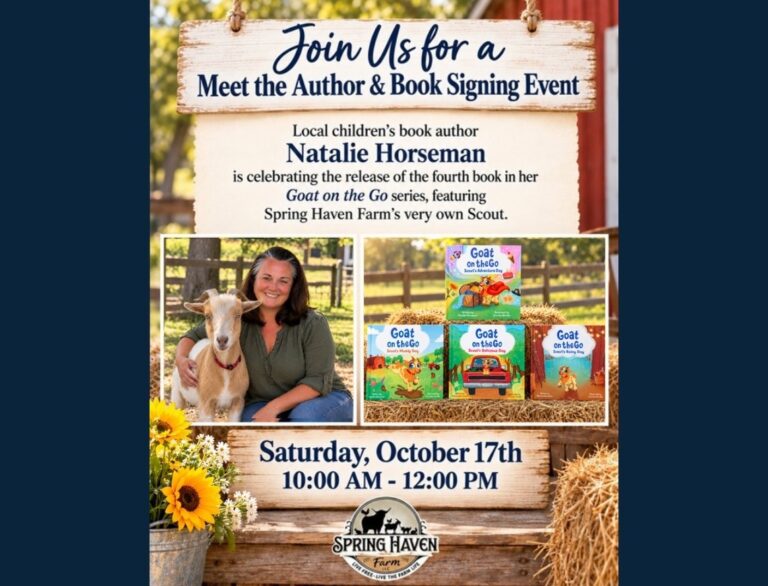 Our Book Launch Party at Spring Haven Farm
 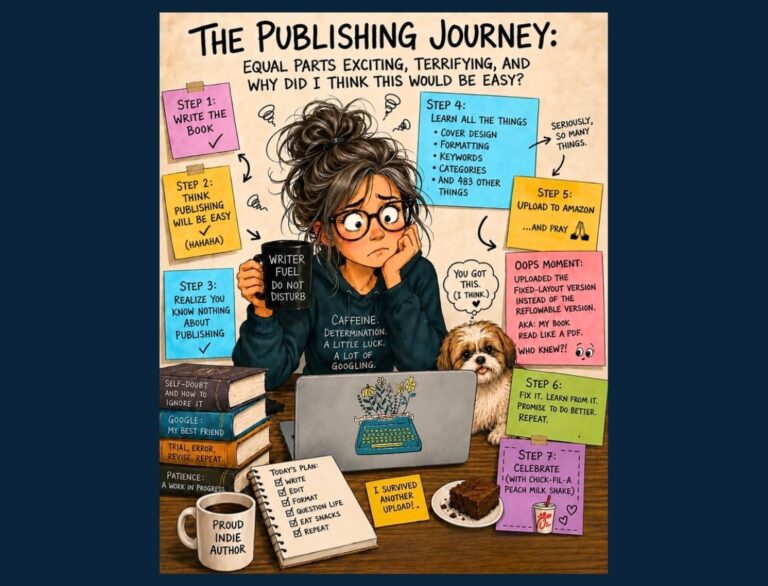 The Publishing Journey, Sticky Notes and All