
What is really happening in your child's brain during make believe, and why it deserves your respect
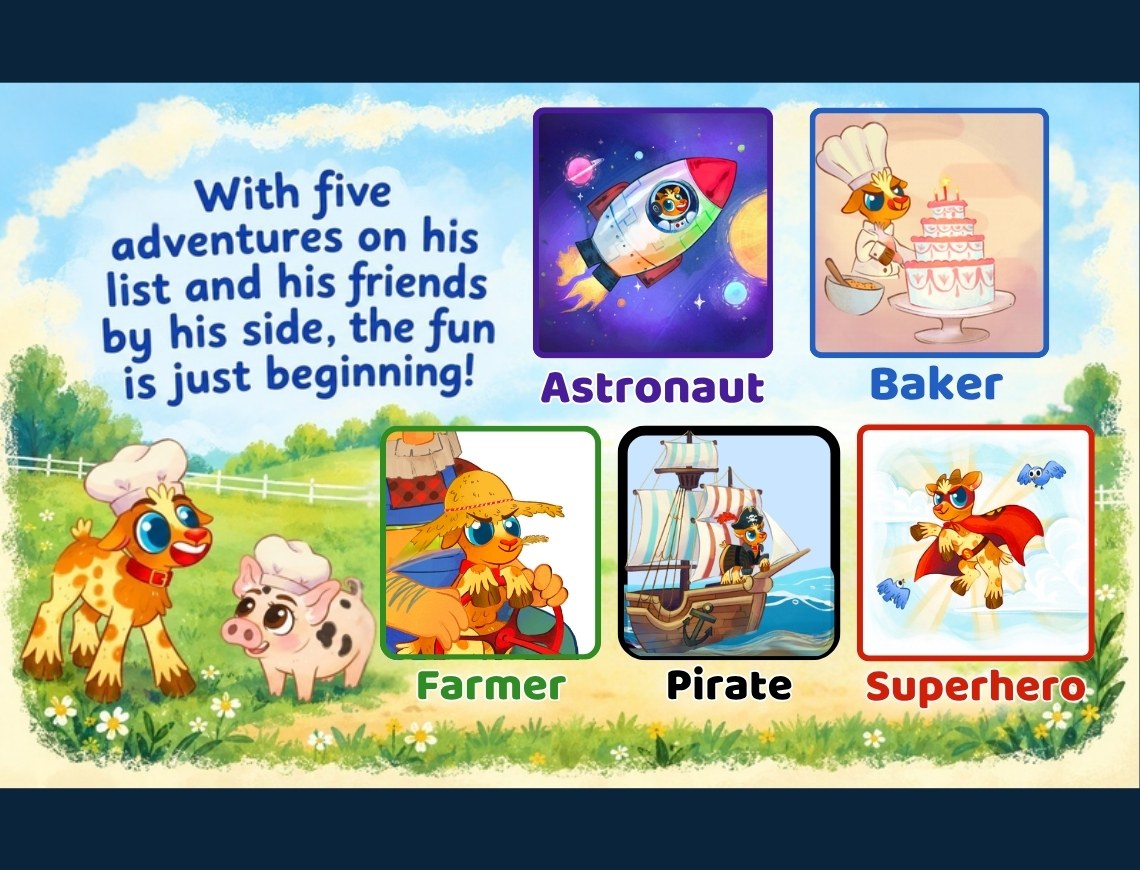
When a child turns a couch into a rocket or a stick into a sword, it is easy to see it as idle fun. It is anything but. Imaginative play is some of the most serious cognitive work a young child does, even though it looks like nothing more than make believe. Scout's five birthday adventures are a perfect picture of it, and worth taking seriously.
Pretend Is Not Idle
To an adult, pretend can look like a child simply filling time. Underneath, a remarkable amount is happening. The child is holding an imaginary world in mind, assigning roles, inventing rules, and keeping track of a story as it unfolds. That is complex mental work disguised as play.
When Scout decides the couch is a tractor and then a rocket, a real child doing the same thing is practicing abstract thinking, which is the ability to let one thing stand for another. That skill underpins language, math, and reading later on.
What Imaginative Play Builds
The benefits run deep and wide. Pretend play builds language, as children narrate, negotiate, and give their characters voices. It strengthens problem solving, as they decide how the story goes and what to do when the plan hits a snag. It supports emotional regulation, as they safely act out big feelings through a character.
It also develops executive function, the mental control that lets a child plan, focus, and follow through. A child organizing a pretend adventure is quietly exercising the same skills they will later use to organize their schoolwork and their days.
The Social Side of Make Believe
When children pretend together, the learning multiplies. They have to agree on the story, take turns leading, and fit their ideas alongside someone else's. This is empathy practice in real time, the daily work of imagining another person's perspective.
It is also where children learn the hard, important lessons of inclusion. Who gets a role? Who gets left out? A child who learns to make room for a smaller friend in a game is practicing a kindness that will matter for the rest of their life.
Why Scout Models This Well
This is exactly why I love writing stories like Scout's Adventure Day. Scout does not wait for fancy equipment or a perfect setting. He builds enormous worlds out of an ordinary farm and a big imagination, and he brings his friends along for everyone.
When Penelope worries she is too small, the story models the social heart of play, which is making sure everyone has a place. A child reading it absorbs both halves of healthy play, the imaginative and the inclusive, without being lectured about either.
Why This Matters More Than Ever
Unstructured imaginative play has been quietly shrinking in many children's lives, squeezed out by packed schedules and screens that entertain without requiring invention. A screen hands a child a finished world. Pretend asks the child to build one. Those are very different workouts for a growing brain.
This is not an argument against every screen. It is a reminder that the open ended, child led play that looks like nothing is actually doing something no device can replace. Protecting time for it is one of the simplest, most valuable things we can give a young child.
How to Encourage It Without Taking Over
The best thing an adult can do with imaginative play is protect the space for it and then mostly stay out of the way. Offer simple, open ended objects rather than toys that do only one thing. A box, a blanket, and a few household items spark more invention than anything with batteries.
When you do join in, follow the child's lead rather than steering the story. Let them be the director. Your job is to say yes to the world they are building, not to improve it.
The Nurse's View
Years of working with children taught me to see play as a window into how a child is growing. Through pretend, children show us how they are making sense of their world, processing their feelings, and practicing the skills they are not ready to name.
So the next time your child turns the living room into the moon, resist the urge to call it just playing. They are doing the serious, joyful work of childhood. The least we can do is take it as seriously as they do, and maybe grab a cape and join the adventure.
That is really why I write the Scout books the way I do. Not to interrupt a child's imagination with a lesson, but to hand them a spark and then get out of the way. A goat, a farm, five big adventures, and a small friend who finds her place. The rest, a child's wonderful mind will build on its own.
 A Permission Slip for Parents Who Feel Like They’re Falling Behind
 The Quiet Power of Rereading (Why Familiar Stories Still Matter)