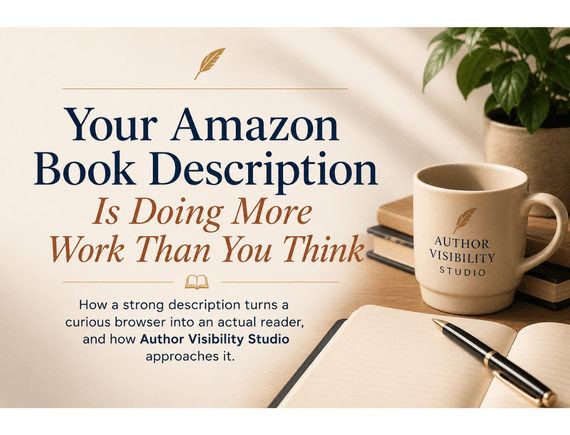
How a strong description turns a curious browser into an actual reader, and how Author Visibility Studio approaches it
Most authors pour months into their book and then write the Amazon description in twenty rushed minutes. I understand why. By the time the book is done, you are exhausted. But that description is one of the hardest working pieces of writing you will ever produce, and treating it as an afterthought quietly costs you readers every single day.
What a Description Actually Does
A book description is not a summary. This is the mistake I see most often. A summary tells the reader what happens. A description makes the reader need to find out. Those are completely different jobs.
When someone lands on your book page, they are deciding in seconds whether to keep reading or move on. The description is the moment where curiosity either turns into a purchase or quietly fades. It is a sales tool wearing the costume of a story snippet. Understanding that one distinction changes how you write every line of it.
The First Line Carries Everything
The opening line of your description has one job, which is to stop the scroll. It needs to create a question the reader cannot walk away from. For Blackwater Parish, I open on a woman waking with blood beneath her nails and no memory of how she got there. You want to know what happened next. That is the whole point.
A weak first line describes. A strong first line provokes. If your opening sentence could belong to a hundred other books, it is not pulling its weight.
Structure That Holds Attention
A description that converts tends to follow a rhythm. A hook that raises a question. A short build that deepens the stakes and the atmosphere. A turn that hints at what the protagonist is up against. And a close that names the reader directly, often by telling them who this book is for.
Naming the audience matters more than people expect. When I write that a book is perfect for fans of domestic suspense and stories of gaslighting and control, the right reader feels recognized. They think, that is me. Recognition sells better than persuasion.
White Space and Formatting Are Not Optional
A wall of text loses readers no matter how good the words are. People skim. Short paragraphs, clear line breaks, and the occasional bold phrase guide the eye and keep someone moving down the page. A description that is formatted well can outperform a better written one that is crammed into a single block.
Why This Is Hard to Do for Your Own Book
Here is the honest part. It is nearly impossible to write a strong description for your own work. You are too close. You know too much. You want to include everything because all of it feels essential. That instinct, to explain rather than entice, is exactly what flattens a description.
This is one of the reasons I built Author Visibility Studio. An outside eye can find the hook you cannot see because you are buried in the full story. Distance is an advantage here, not a shortcoming.
Keywords Belong Here Too
A description does double duty. It persuades a human reader, and it also helps your book surface in search. The words a reader would actually type when looking for a book like yours should appear naturally in your description. For a southern gothic thriller, that might mean phrases about gaslighting, domestic suspense, or atmospheric fiction.
The key word is naturally. A description stuffed with search terms reads like a robot wrote it and persuades no one. The goal is to weave the language your reader uses into copy that still feels human and compelling. Done well, the same sentence works for both the reader and the search.
How Author Visibility Studio Approaches It
When the Studio works on a description, we start by identifying the single most compelling question the book raises, then build everything around it. We sharpen the first line until it stops the scroll. We shape the rhythm so the tension rises. We name the exact reader who will love the book. We weave in the language readers actually search for. And we format it so a skimming browser still gets pulled in.
The writing is yours. The book is yours. We help the description do justice to both.
The Bigger Picture
Your description is often the first real impression a stranger has of your writing. It deserves the same care you gave the manuscript. A few hours of focused attention here can change how many people ever open your book at all. That is a remarkable return for a piece of writing most authors rush. It is worth slowing down for.
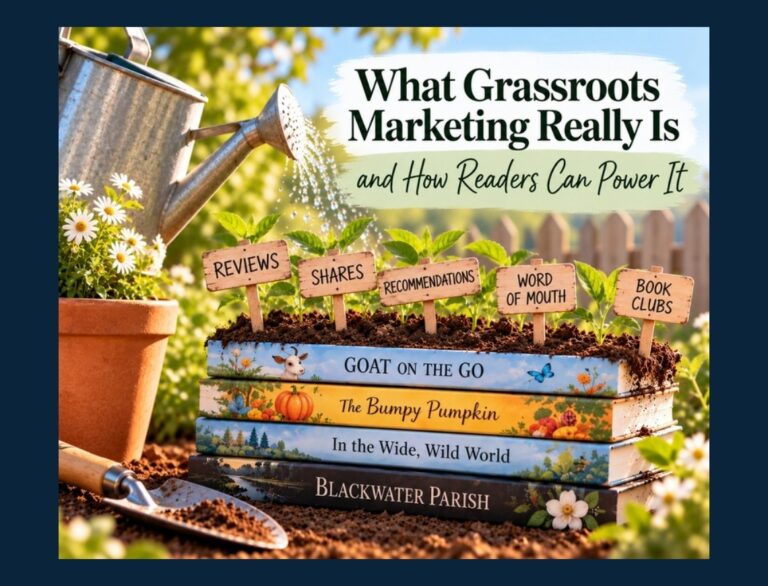 What Grassroots Marketing Really Is, and How Readers Can Power It
 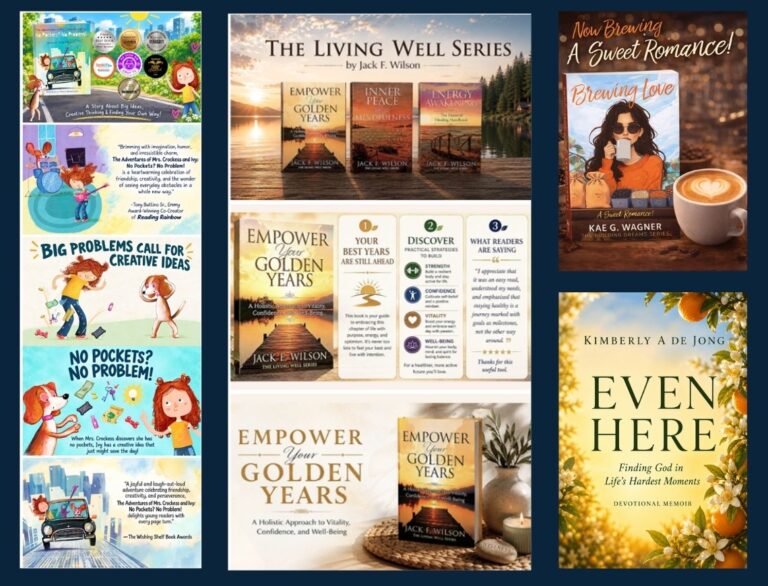 Bringing Other Authors’ Books to Life in Graphics