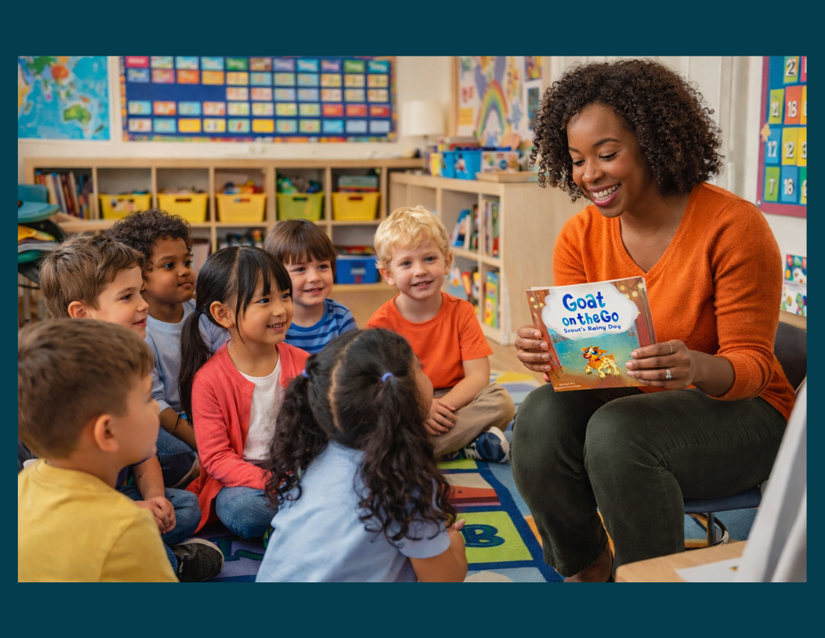
You came for the stories, but you gave me something even better
When I started writing children’s books, I thought the information flowed one direction. Writer creates story. Reader receives story. Simple.
I was completely wrong.
My readers have taught me more than I ever expected. Not in formal, structured ways, but through the messages they send, the stories they share, and the ways they use these books that I never anticipated.
Here’s what you’ve shown me.
Stories Don’t Belong to the Author
The moment a book leaves my hands, it stops being mine. It becomes yours. And what you do with it is often more beautiful than anything I imagined.
A parent told me she reads The Bumpy Pumpkin to her daughter every time the little girl feels like she doesn’t fit in at school. That wasn’t something I planned. That was something a family created on their own.
A grandmother reads my books to her grandchildren over video calls. She lives across the country, and she told me these books are the bridge between them.
These aren’t my stories anymore. They belong to every family who has made them part of their lives. And that’s exactly how it should be.
Kids See Things Adults Miss
Parents and teachers send me the things children say about my books, and I am constantly amazed by their observations.
A five year old told her mom that the bumpy pumpkin is “brave because it just stays bumpy and doesn’t try to be smooth.” I didn’t write the word “brave” anywhere in that book. She found it on her own.
A first grader told his teacher that Luna is “the best character because she doesn’t say anything but you can feel her caring.” He understood something about quiet presence that some adults struggle to articulate.
A child noticed that in Scout’s Rainy Day, the barn gets brighter as the animals start having fun, even though the storm is still happening outside. She said, “The happy made the lights come on.” She was talking about illustration choices, but she was also talking about something much deeper.
Children don’t just passively receive stories. They actively interpret them. They find meanings the author didn’t consciously put there. They make connections that are startlingly perceptive.
Imperfection Resonates More Than Perfection
Here’s something I didn’t expect: the messages that move me most aren’t about how polished or perfect the books are. They’re about how the imperfect parts connect.
Parents relate to the messy, chaotic reality I describe in my blog posts. They appreciate being told that reading in pajamas at 4 PM counts. They feel seen when I acknowledge that story time sometimes falls apart.
The bumpy pumpkin resonates not because it’s a perfect metaphor but because every single person has felt bumpy at some point. The simplicity of that truth is what gives it power.
I used to worry that my writing wasn’t literary enough or clever enough. My readers taught me that clarity and heart matter more than cleverness. That being understood beats being impressive every single time.
Community Builds Itself
One of the most surprising things has been watching readers connect with each other. Parents sharing book recommendations in online groups. Teachers exchanging activity ideas. Families passing along copies to friends.
I didn’t create that community. You did. All I did was write some stories about a goat and a pumpkin. You built the network of people who care about the same things: raising kind kids, making reading fun, celebrating differences, navigating big feelings.
That network is bigger than any single book. And it grows every time someone shares a story with a child.
The Small Moments Are the Big Moments
My nursing background taught me to pay attention to small things. A slight change in a patient’s breathing. A subtle shift in body language. The details that signal something important is happening beneath the surface.
My readers reinforced this lesson. The “small” messages are never actually small.
“My son fell asleep holding your book.” That’s not a small thing. That’s a child who found comfort in a story.
“My daughter said ‘I’m a bumpy pumpkin’ today when she was feeling left out.” That’s not a small thing. That’s a child using a story to name her experience.
“We read Scout’s Rainy Day during an actual rainstorm and my kids said it was the best day ever.” That’s not a small thing. That’s a family creating a memory they’ll carry for years.
Every one of those moments matters. And you’ve taught me to never underestimate them.
What I Want You to Know
If you’ve ever sent me a message, left a review, shared a photo, told a friend about these books, or simply read one of my stories to a child, you’ve shaped this journey in ways I cannot fully express.
Writing can be lonely work. You sit alone with your ideas and hope they connect. When they do, when someone reaches out and says “this mattered to us,” it’s like oxygen.
You’ve taught me to keep going. You’ve taught me that simple stories can do profound work. You’ve taught me that the best part of being an author isn’t the writing. It’s the reading. It’s you, opening a book with a child, and letting the story do what stories do.
Thank you for teaching me. I’m still learning.
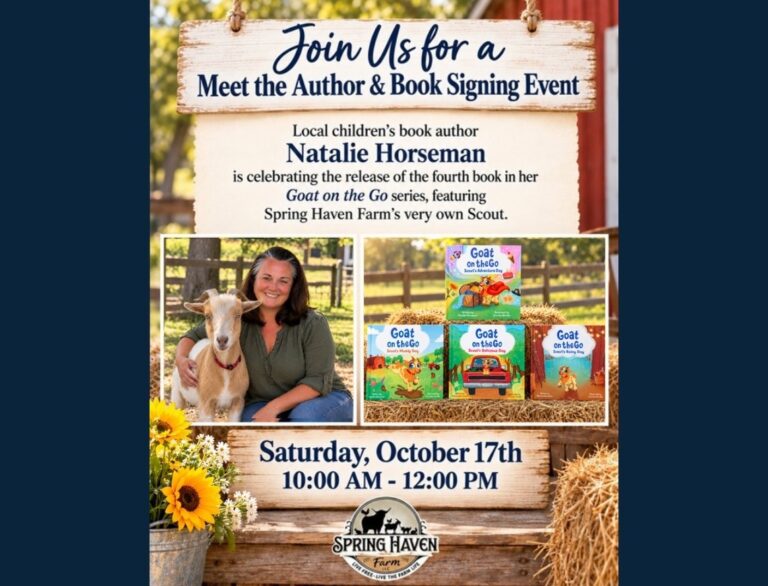 Our Book Launch Party at Spring Haven Farm
 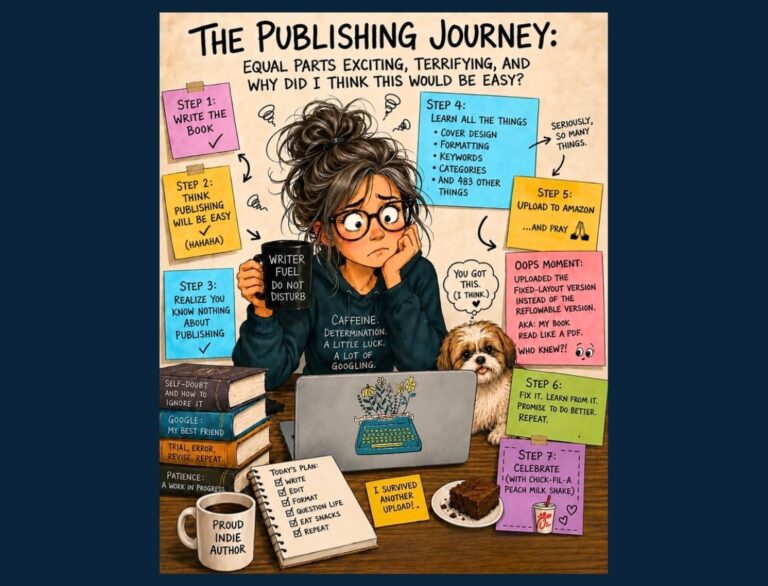 The Publishing Journey, Sticky Notes and All