
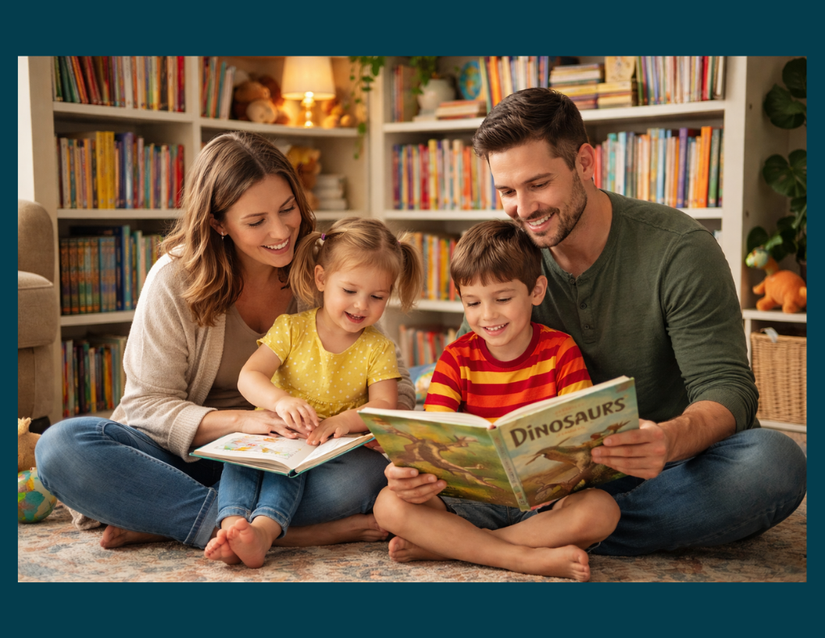
No spreadsheets, no schedules, no stress. Just stories and snacks.
When you hear “book club,” you might picture wine, cheese, and adults discussing literary themes they mostly pretend to understand. (No judgment. I’ve been in those book clubs.)
But a family book club? It’s simpler, louder, and involves considerably more goldfish crackers.
Here’s how to start one without overcomplicating anything.
What a Family Book Club Actually Is
It’s your family reading the same book and talking about it. That’s it. That’s the whole concept.
No formal structure. No assigned discussion leaders. No reading logs. No pressure to have profound insights.
Just a shared story and some conversation around it.
The Setup (5 Minutes)
Pick a book. Everyone gets a vote. If your family has mixed ages, picture books work brilliantly because they’re accessible to everyone while still offering layers for older readers and adults.
Pick a snack. This is not optional. Snacks make everything better. Match the snack to the book if you want to be fancy. Reading Scout’s Rainy Day? Apple slices and popcorn. Reading The Bumpy Pumpkin? Pumpkin muffins. Reading something about dragons? Whatever you want, because dragons aren’t real and can’t judge your snack choices.
Pick a time. Weekly works great. Monthly works too. “Whenever we remember” also works. The frequency matters less than the doing.
The Rules (There Aren’t Many)
Everyone’s opinion counts. A four year old’s take on why the pumpkin is bumpy is just as valid as a twelve year old’s analysis of the metaphor. Maybe more valid, actually.
No wrong answers. If your kid thinks Scout’s Rainy Day is actually about aliens, that’s a creative interpretation and it counts.
Keep it short. Twenty minutes is plenty. Fifteen is fine. If someone’s done after five minutes, that’s okay too. End while it’s still fun.
Everyone participates somehow. Listening counts as participating. Drawing a picture about the book counts. Even holding the book while someone else talks counts for the youngest members.
Discussion Starters That Actually Work
Forget “What is the author trying to say?” Nobody likes that question in any context.
Try these instead. What was the best part? Would you want to be friends with this character? What would you do differently? Was there a part that made you feel something? What should happen next in this story? Is anyone in this story like someone you know?
For younger kids, keep it even simpler. Did you like it or not like it? What was funny? What was your favorite picture? Can you make the face the character makes?
For older kids and teenagers, try these. Do you agree with what the character did? What would the story look like from a different character’s perspective? Is this story realistic? Does it remind you of anything in your own life?
Making It Stick
The families who keep this going share a few habits. They don’t take it too seriously. The moment it becomes an obligation, it stops being fun. They let kids choose the book at least half the time. Even if the grownups find the book tedious, the child’s engagement is what matters. They keep the snack tradition alive. Amazing how many family traditions survive purely because of food.
They also stay flexible. Missed a week? No big deal. Nobody finished the book? Discuss what you read. Want to change the format? Change it.
The real magic happens in the conversations. When your teenager says “that character reminded me of something at school” and suddenly you’re having a real talk that wouldn’t have happened otherwise. When your younger child connects a book to their own feelings and you realize they’re processing something important. When the whole family laughs at the same part and that shared laughter becomes a memory.
Variations That Work
Movie and book comparison: Read a book, then watch the movie version. Discuss what’s different. Kids love having strong opinions about this.
The traveling book club: Each family member picks a book for the others to read. This is how you discover that Dad has surprisingly good taste in picture books.
The cooking book club: Find books that involve food, then cook something from the story. Read a book about pizza, make pizza. Read a book about soup, make soup. This variation has the highest success rate because food.
The outdoor book club: Read outside. A blanket, some books, and a park. Change of scenery changes everything.
What This Really Does
A family book club, even a casual one, does something subtle and important. It creates a space where your family practices communication, empathy, and listening. Where different perspectives are welcomed. Where everyone’s voice matters.
It also builds a shared library of references. “Remember that book we read?” becomes a family phrase that connects you across time. You’re not just reading. You’re creating a family vocabulary.
You don’t need fancy materials. You don’t need a plan. You just need a book, some snacks, and the willingness to talk about a story together.
Start this week. Keep it simple. See what happens.
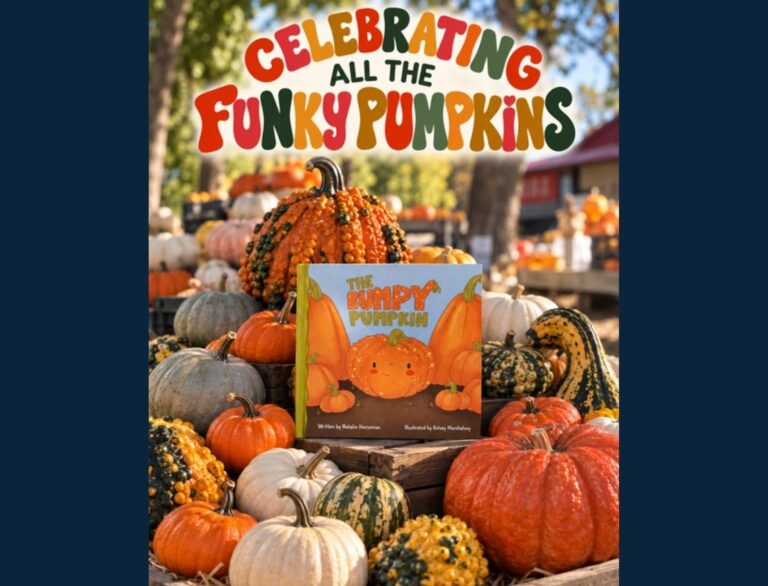 Do You Love Funky Pumpkins?
 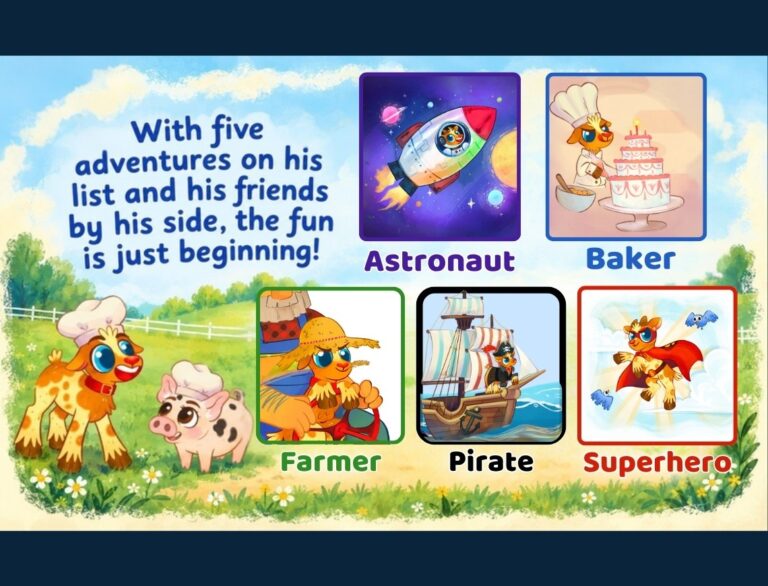 The Serious Business of Pretend: Why Imaginative Play Matters