
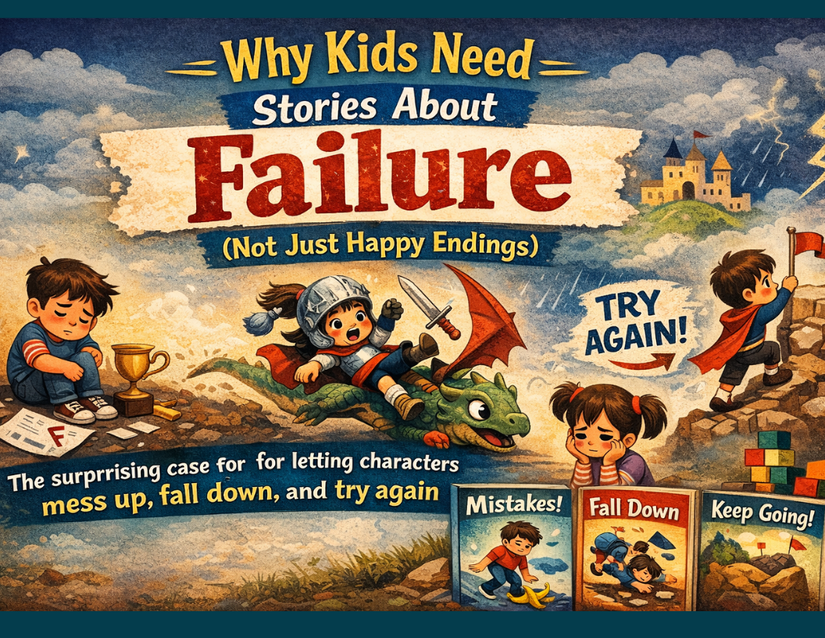
The surprising case for letting characters mess up, fall down, and try again
Here’s something that might sound strange coming from someone who writes happy children’s books: kids need more stories where things go wrong.
Not wrong in a scary, traumatic way. Wrong in a real way. The kind of wrong where the character tries something and it doesn’t work. Where they make a mistake. Where the first attempt falls flat and they have to figure out what to do next.
Because that’s what life actually looks like.
The Problem With Perfect Characters
When every character in every story succeeds easily, children absorb a subtle but powerful message: competent people get things right the first time. If you struggle, something must be wrong with you.
This creates kids who are afraid to try. Kids who give up at the first sign of difficulty. Kids who interpret failure as a personal flaw rather than a normal part of learning.
Research in child development confirms this. Children who believe ability is fixed (“you’re either smart or you’re not”) avoid challenges. Children who believe ability grows through effort (“you get better by trying”) embrace them.
Stories shape which belief takes root.
What Failure in Stories Actually Teaches
When Scout kicks over a basket of apples in frustration during Scout’s Rainy Day, something important happens. Kids see a character they love behaving imperfectly. They see that the reaction is allowed. And then they see what happens next.
Scout doesn’t get punished for his frustration. He doesn’t get lectured. He sits with the feeling, and eventually he moves through it. That’s not a story about failure in the traditional sense, but it models something children desperately need: the permission to not be okay and the ability to find their way through.
Stories where characters fail teach several critical lessons. Mistakes are normal, not shameful. Difficulty doesn’t mean impossibility. You can feel frustrated and still keep going. The path forward often involves adjusting your approach, not abandoning your goal. Other people mess up too, and it’s okay.
The “Try, Fail, Try Again” Arc
The most powerful children’s stories follow a pattern that mirrors real learning. The character wants something. They try to get it. It doesn’t work. They feel disappointed or frustrated. They try a different approach. Eventually, they find a way, though it might not be exactly what they originally imagined.
This arc is more than good storytelling. It’s a template for life. Every skill a child learns follows this pattern, from tying shoes to making friends to mastering long division. The children who understand this arc have a tremendous advantage. They expect difficulty. They don’t interpret it as evidence of their inadequacy.
When I write Scout’s adventures, I’m careful to include moments where things don’t go perfectly. Scout gets messy. He gets lost. He gets disappointed. He kicks over apple baskets. These moments aren’t flaws in the story. They’re the story. Because that’s where the growth lives.
What Parents Can Do
When you’re reading with your child and a character fails or struggles, resist the urge to skip ahead to the resolution. Sit with the uncomfortable part. Ask what the character might be feeling. Wonder aloud what might happen next.
This teaches children that the middle of the struggle is a place you can survive. That discomfort is temporary. That not knowing how things will turn out is uncomfortable but bearable.
You can also share your own failure stories. Kids are fascinated to learn that adults mess things up too. The time you burned dinner. The project at work that didn’t go as planned. The hobby you tried and abandoned. These stories humanize you and normalize the experience of imperfection.
My own journey is full of detours and false starts. I held onto The Bumpy Pumpkin for years before I was ready to share it. I balanced nursing shifts with late night writing sessions that sometimes produced nothing usable. I learned publishing by making every possible mistake along the way.
None of that was wasted. All of it was necessary.
The Failure Sweet Spot
There’s a balance here, of course. Children don’t need stories that are relentlessly bleak or where characters fail without hope. They need stories where failure is present, acknowledged, and eventually navigated.
The best stories don’t pretend failure doesn’t hurt. They show that it hurts AND that you survive it. That distinction matters enormously to a child sitting in the middle of their own struggle.
The most resilient kids I’ve encountered in my nursing career share one trait: they’ve been allowed to fail in safe environments. They’ve had adults who let them struggle, sat with them through frustration, and helped them understand that difficulty is data, not destiny.
Stories can be one of those safe environments. A place where failure happens to someone else first, where children can watch and learn before they need those skills themselves.
Give your kids stories where characters stumble. Where plans don’t work. Where the first try isn’t the last try. They’ll be better for it.
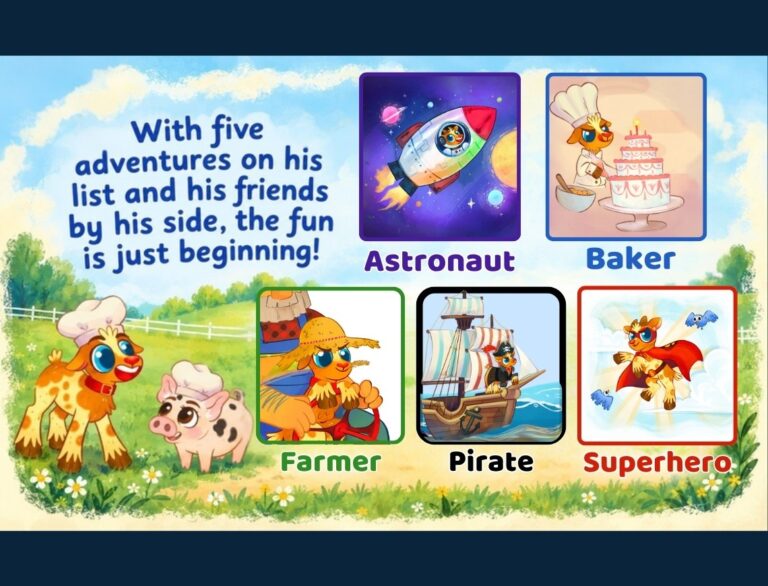 The Serious Business of Pretend: Why Imaginative Play Matters
 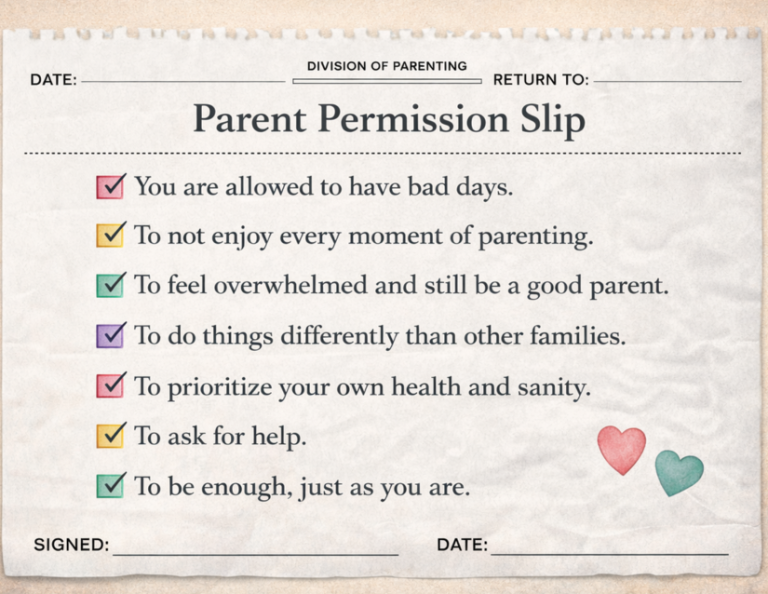 A Permission Slip for Parents Who Feel Like They’re Falling Behind