
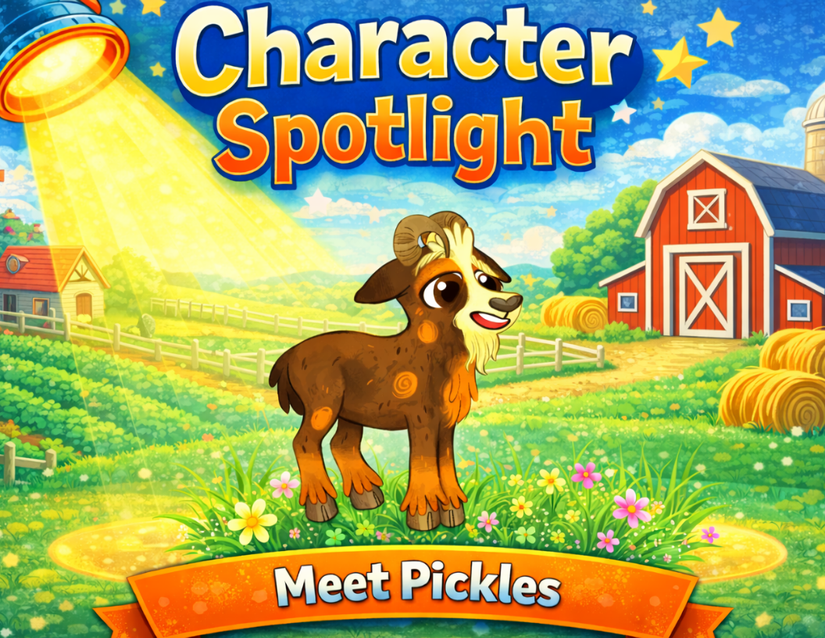
A character spotlight on Scout’s wisest friend and what he teaches kids about patience, experience, and showing up
Every adventurous kid needs someone steady in their corner. For Scout, that someone is Pickles.
If you’ve read the Goat on the Go books, you know Pickles. He’s the scruffy old goat with the knowing grin, the one who’s been around Stephens Farm long enough to have seen everything at least twice. He doesn’t panic. He doesn’t rush. He just shows up, steady and sure, with a story or a nudge in the right direction.
And honestly? Pickles might be my favorite character to write.
Why Pickles Exists
When I was creating the world of Stephens Farm, I knew Scout needed a friend who balanced his energy. Scout is curiosity in motion, always chasing the next adventure, always leaping before looking. He needed someone who had already done the leaping and could offer perspective without squashing the enthusiasm.
That’s Pickles. He’s not there to stop Scout from exploring. He’s there to make sure Scout knows someone has his back.
Every child needs a Pickles. That person who doesn’t try to control them but lets them know they’re not alone. A grandparent, an older sibling, a neighbor, a teacher, a family friend. Someone who says, through their steady presence, “Go ahead and explore. I’ll be here.”
The Art of the Gentle Nudge
Pickles never lectures Scout. He doesn’t say “you shouldn’t do that” or “be careful” or “I told you so.” Instead, he shares stories. He grins. He offers just enough information to help Scout make better choices on his own.
In Scout’s Rainy Day, it’s Pickles who first tells Scout about the County Fair and gets him excited about the games, the rides, and the sweet treats. And later, when the animals create their barn fair, Pickles is right there bobbing for apples and keeping the fun going.
Pickles doesn’t fix things for Scout. He models a way of being in the world: curious but calm, experienced but still enthusiastic, wise but never preachy.
What Pickles Teaches Kids
Children pick up on Pickles in interesting ways. Teachers have told me that kids gravitate toward him during discussions, especially kids who feel like the “old soul” in their friend group.
One teacher shared that a quiet boy in her class said he wanted to be “the Pickles of the kindergarten.” When she asked what he meant, he said, “The one who helps but doesn’t boss.” I still think about that.
Pickles teaches several things without ever spelling them out. Patience is valuable. You don’t have to be the loudest or the fastest to matter. Experience is worth something. Showing up consistently is its own kind of love. You can be old and still have fun.
These aren’t lessons kids need preached at them. They’re lessons kids absorb by watching a character they like live them out.
The Inspiration Behind Pickles
People ask me if Pickles is based on a real goat. The answer is yes, absolutely.
The real Pickles was Scout’s pen mate. They lived together, and Pickles was exactly the kind of steady, been there done that presence you see in the books. He had this wonderfully scruffy look and the most character filled horns I’ve ever seen. One curved toward the front and the other curved toward the back, like even his horns couldn’t agree on a direction. He was perfectly, wonderfully imperfect.
Watching the real Pickles and Scout together inspired their dynamic in the stories. Pickles had this calm energy next to Scout’s constant motion. He’d already figured out the farm, already explored every corner, and there was something so reassuring about his presence. Scout could bounce off the walls and Pickles would just be there, steady and unbothered, like he’d seen it all before. Because he had.
That real life friendship between two goats became the foundation for one of my favorite relationships in the series. And those mismatched horns? They’re a perfect metaphor for Pickles himself. A little offbeat, a little unexpected, and absolutely wonderful exactly as he is.
In my nursing career, I’ve seen the impact of steady, patient presence on children. The nurse who takes an extra moment to explain, the caregiver who sits beside a scared child without rushing them, the person who simply stays. That quiet consistency does more than most grand gestures ever could.
Why the “Old and Wise” Character Matters
Children’s books sometimes forget that older characters can be fun. The wise elder becomes a boring authority figure, and kids tune out.
Pickles avoids that trap because he’s not an authority figure. He’s a friend. He gets excited about apple bobbing. He tells stories with a grin. He’s wise, yes, but he’s also playful. He’s proof that getting older doesn’t mean getting boring.
Kids need to see this. In a culture obsessed with youth, showing children that older characters are valuable, interesting, and fun shifts something important in how they see the world and the people around them.
Looking Ahead
Without giving too much away, Pickles has a special role to play in future Scout adventures. Because that’s what Pickles does. He shows up when it matters, offers what’s needed, and lets Scout take it from there.
If your family has a Pickles, thank them. If your child is someone else’s Pickles, celebrate that. And if you’re looking for the kind of steady, warm friendship that Pickles represents, you might just find it between the pages of a story about a scruffy old goat who knows a thing or two.
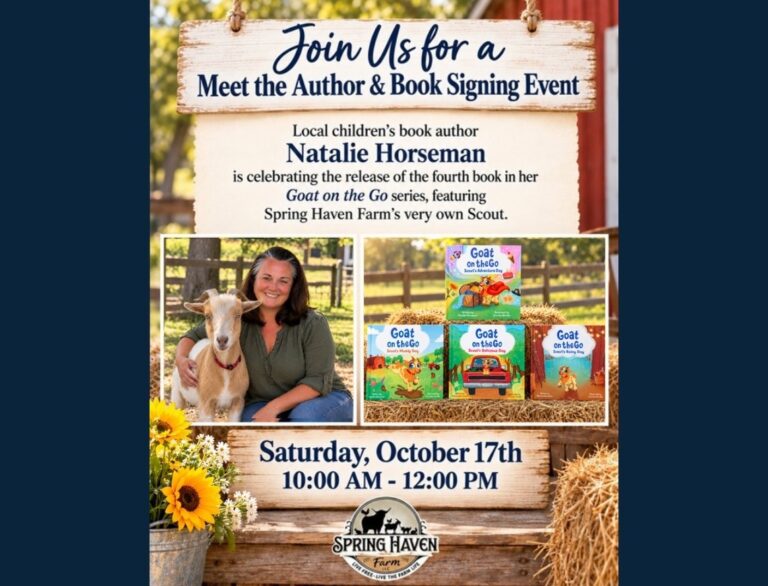 Our Book Launch Party at Spring Haven Farm
 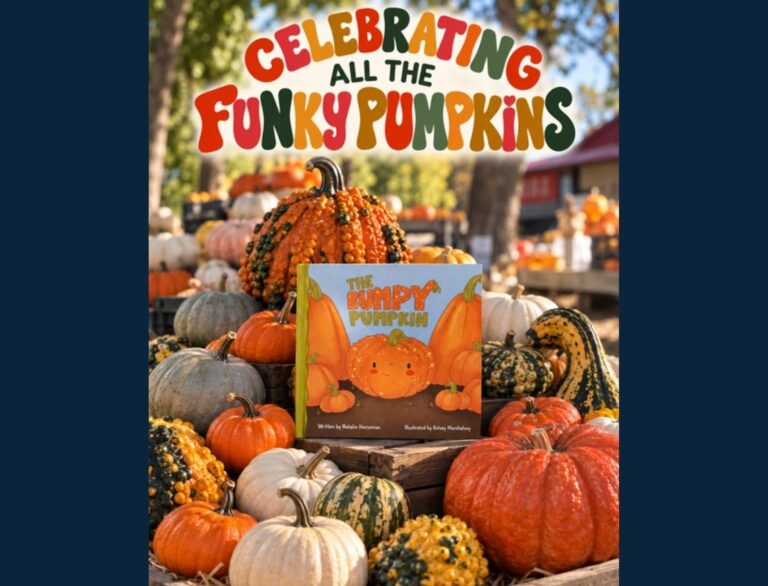 Do You Love Funky Pumpkins?