
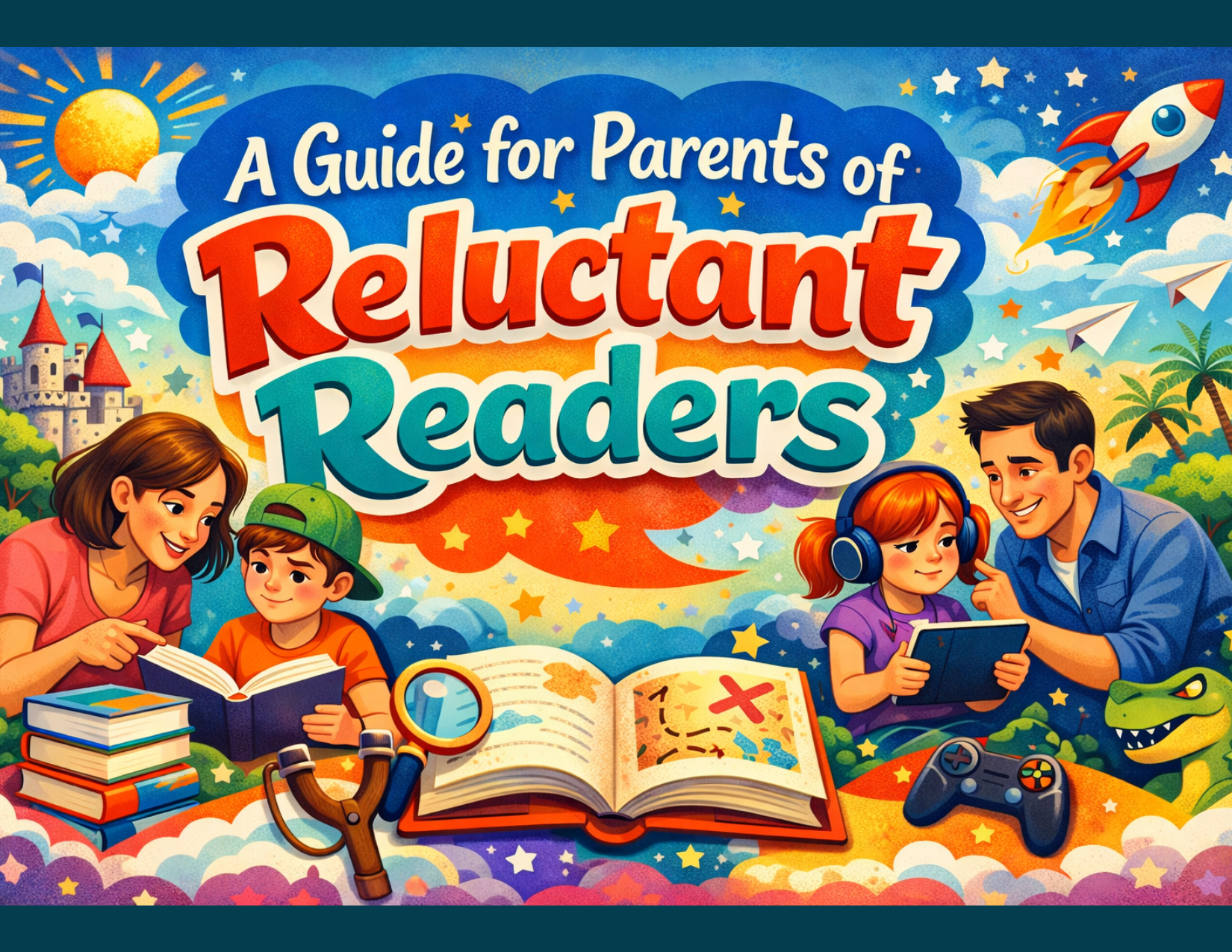
Practical strategies for the kid who would rather do literally anything else
“I hate books.”
Three words that can break a book-loving parent’s heart.
You imagined cozy reading sessions. You pictured a child who devoured stories the way you did. Instead, you have a kid who would rather clean their room than read. (And they really hate cleaning their room.)
Take a breath. This is more common than you think. And it’s not a life sentence.
First: What “I Hate Books” Usually Means
When children say they hate books, they rarely mean all books forever. They usually mean something more specific.
“I hate the books I’ve been given.” The topics don’t interest them. The reading level is wrong. The format doesn’t work for how their brain operates.
“I hate how reading feels.” It’s hard. It’s slow. Other kids seem to do it effortlessly while they struggle.
“I hate being forced to read.” Reading has become associated with pressure, homework, and adult disappointment. The joy has been squeezed out.
“I hate sitting still.” Their body needs to move, and reading feels like imprisonment.
Understanding which “hate” your child actually means helps you find the right solution.
Check the Fit Before Assuming the Worst
Before worrying that your child will never be a reader, examine what they’ve been offered.
Have they only been given books adults think they should read? Sometimes kids need books that seem silly, gross, or below their “level.” If they’ll actually read it, it counts.
Is the reading level right? Books that are too hard create frustration. Books that are too easy feel babyish. Finding the sweet spot matters more than you might think.
Have they experienced variety? Some kids don’t connect with fiction but love nonfiction. Some hate chapter books but devour graphic novels. Some won’t touch fantasy but love realistic stories about kids like them.
The right book can change everything. Keep searching.
Alternative Formats Are Real Reading
Let’s be very clear about something: reading doesn’t only count if it’s a traditional book with chapters and no pictures.
Graphic novels are reading. Complex visual literacy, narrative comprehension, vocabulary building. All happening. All valid.
Audiobooks are reading. Comprehension, vocabulary, love of story. The words enter through ears instead of eyes, but the brain processes them the same way.
Magazines are reading. A kid obsessed with a sports magazine is still reading.
Joke books are reading. Riddle books are reading. Guinness World Records is reading. Books about Minecraft, Pokemon, or whatever they’re currently obsessed with? Reading.
If your child claims to hate books but will happily read video game guides for hours, they don’t hate reading. They hate being told what to read.
When the Body Needs to Move
Some children cannot sit still and read. This isn’t defiance or a character flaw. It’s how their nervous system works.
For these kids, try reading while they move. Swinging on a swing. Bouncing on a trampoline. Walking around the yard. Lying upside down on the couch.
Audiobooks work beautifully for movement-oriented kids. They can listen while doing something with their hands or body. Building with Legos. Drawing. Playing with clay. The movement actually helps them focus on the story.
Forcing a wiggly child to sit motionless with a book almost guarantees they’ll hate reading. Meeting them where they are opens new possibilities.
When Reading Is Genuinely Hard
Sometimes reluctance isn’t about preference. It’s about struggle.
If your child avoids reading because it’s difficult, that’s important information. They might need vision checked. They might benefit from reading support or assessment. They might have a learning difference that makes traditional reading challenging.
This isn’t failure. This is data. And there are so many resources available once you understand what’s happening.
A child who struggles with decoding can still love stories through audiobooks while they build skills. The goal is keeping story alive in their life while addressing the underlying challenges.
The Pressure Problem
Here’s a hard truth: sometimes we make it worse.
When reading becomes a battleground, everyone loses. The more you push, the more they resist. Reading gets associated with conflict, disappointment, and stress.
If this describes your situation, consider stepping back completely. Stop mentioning books. Stop requiring reading time. Let the pressure release.
Then, quietly, make books available without comment. Leave interesting ones around the house. Listen to audiobooks during car rides without making it a teaching moment. Read your own books visibly.
Sometimes kids need space to find their way back to reading on their own terms.
Play the Long Game
Reading love often develops in stages. A child who hates books at seven might discover graphic novels at nine and chapter books at twelve. A reluctant reader in elementary school might become a bookworm in high school.
Your job isn’t to force immediate reading love. Your job is to keep the door open. To keep books available. To avoid making reading a source of shame or conflict.
Some of the most voracious adult readers I know hated books as kids. They found their way eventually. Yours might too.
The Most Important Thing
Keep your relationship with your child stronger than your relationship with reading goals.
A child who doesn’t love books but feels loved and accepted by their parents is okay. A child who reads perfectly but feels like a constant disappointment is not okay.
Books matter. But your child matters more.
Keep trying. Keep offering. Keep believing they’ll find their way.
And when they finally connect with a book they love? You’ll be there to celebrate.
 The Serious Business of Pretend: Why Imaginative Play Matters
  A Permission Slip for Parents Who Feel Like They’re Falling Behind