
Making story time work when your kids are at completely different stages
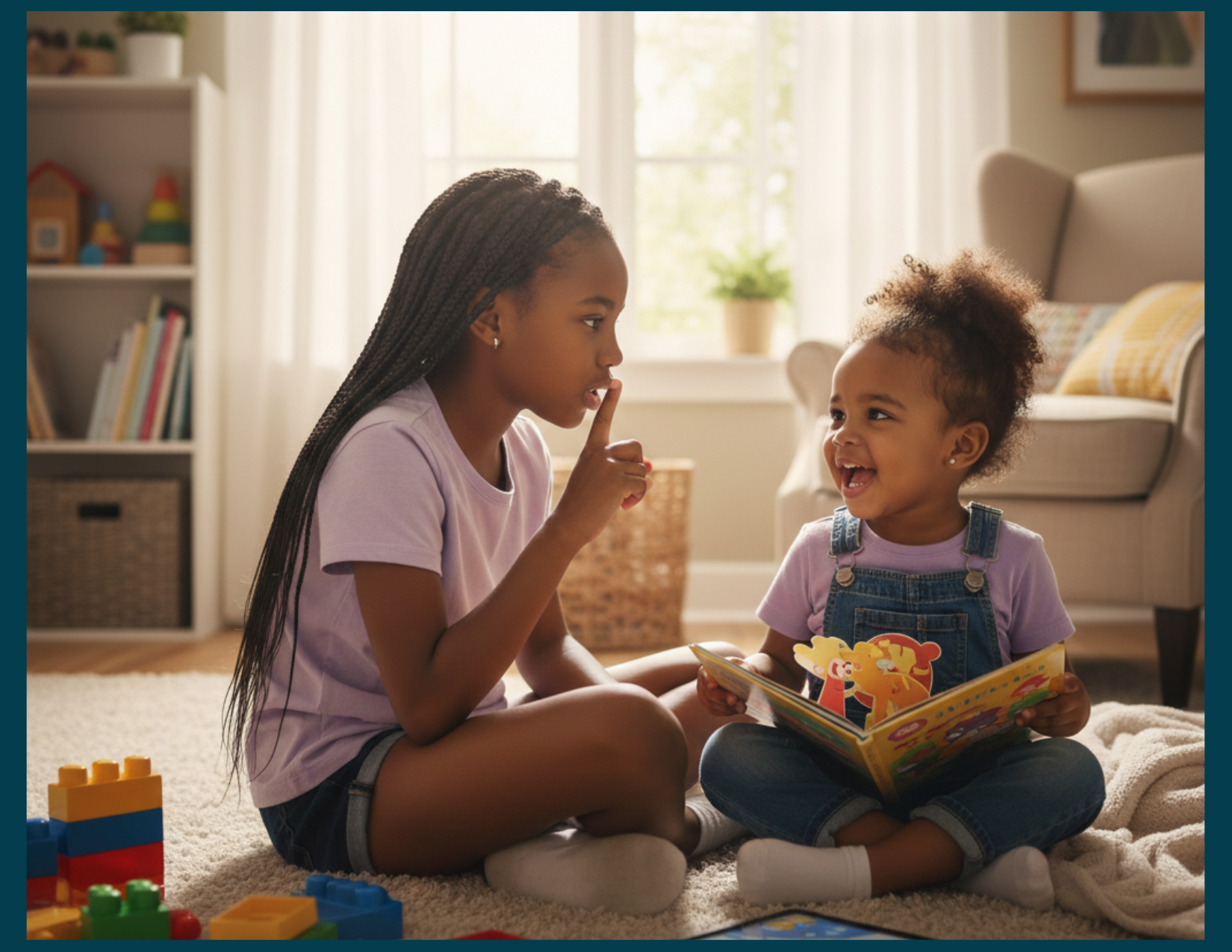
Picture this: you sit down for family story time. Your four-year-old is bouncing with excitement, clutching a picture book. Your eight-year-old rolls their eyes and announces that picture books are “for babies.” Your toddler immediately tries to eat the book.
Welcome to reading with siblings.
It’s one of the most common challenges parents mention to me. How do you create meaningful story time when your kids are at completely different stages? When one needs pictures and one wants plot? When attention spans range from thirty seconds to thirty minutes?
It’s tricky. But it’s absolutely possible.
The Myth of Perfect Family Story Time
Let’s release this expectation right now: everyone sitting quietly, equally engaged, for the same book at the same time. That’s a stock photo, not real life.
Real family reading is messier. Someone wiggles. Someone interrupts. Someone wanders off and comes back. Someone complains.
And you know what? It still counts. Connection is happening even when it doesn’t look perfect.
Strategy One: Embrace the Overlap
Here’s a secret about picture books: they work for a wider age range than we give them credit for.
A four-year-old sees the pictures and follows the basic story. An eight-year-old catches humor, wordplay, and deeper themes. A toddler experiences rhythm, voices, and togetherness.
Same book, different experiences. All valid.
The Bumpy Pumpkin resonates with preschoolers who notice the bumps and school age kids who understand feeling different. Scout’s Rainy Day works for little ones who love the farm animals and older kids processing disappointment.
Don’t assume your older child has outgrown picture books. They’ve just graduated to experiencing them differently.
Strategy Two: Let Older Kids Lead
One of the most magical things that can happen in a sibling relationship is an older child reading to a younger one.
The older child practices fluency, builds confidence, and feels important. The younger child gets one on one attention and sees reading modeled by someone they admire. Both kids bond over the shared experience.
This doesn’t require perfect reading. A six-year-old “reading” to a two-year-old by describing pictures is wonderful. A ten-year-old reading while a kindergartner listens adoringly is beautiful.
You don’t have to be present for every moment of this. Let them have their own reading relationship. It often becomes something precious.
Strategy Three: Strategic Separation
Sometimes the answer is not reading together.
Toddler gets a board book during afternoon snack while you read a chapter book with your older child. Older child reads independently during quiet time while you do picture books with the little one. Bedtime routines happen in shifts.
This isn’t failure. It’s meeting each child where they are.
Every child deserves some reading time pitched exactly to their level and interests. If family reading is always a compromise, individual time becomes even more important.
Strategy Four: Give Everyone a Job
Squirmy kids often settle when they have a role to play.
The toddler holds the book (even if they hold it upside down). The preschooler turns the pages. The older child does character voices. Everyone has a job that keeps them invested.
You can also let kids take turns choosing the book. Yes, this means sometimes you read a book that bores half the audience. That’s okay. Taking turns teaches patience and shows everyone their preferences matter.
Strategy Five: Audiobooks as the Great Equalizer
Audiobooks work surprisingly well for mixed ages.
On car rides, everyone listens to the same story. Little ones absorb what they can. Older kids follow the plot. Nobody has to sit still or look at anything.
Chapter books work especially well this way. A story that would lose a preschooler’s attention in print might captivate them in audio form, especially with a great narrator.
Family audiobook time during dinner prep or long drives can become a treasured ritual that spans ages.
Strategy Six: Lower the Bar
What if “reading with siblings” just meant books were happening in the same room?
Older child reading silently on the couch. Younger child flipping through picture books on the floor. Toddler chewing on a board book nearby. You reading your own book or a magazine.
Everyone is reading. Everyone is together. That’s a reading culture.
It doesn’t always have to be a performance. Sometimes parallel reading is enough.
The Hidden Benefit
Here’s something beautiful that happens when siblings share story time, even imperfectly: they build common ground.
References to Scout become inside jokes. Quotes from favorite books become family language. Shared stories create shared memories.
Years from now, your kids might not remember the wiggles and interruptions. They’ll remember that reading was something your family did together. That’s the legacy that matters.
The Real Goal
You’re not trying to create identical reading experiences for different children. You’re trying to weave books into your family’s fabric in whatever way actually works.
Some nights that’s everyone together. Some nights that’s separate reading times. Some nights that’s audiobooks in the car because everyone is exhausted and that’s all you’ve got.
All of it counts. All of it builds readers. All of it matters.
Your family’s version of story time is the right version.
 Do You Love Funky Pumpkins?
  The Serious Business of Pretend: Why Imaginative Play Matters