
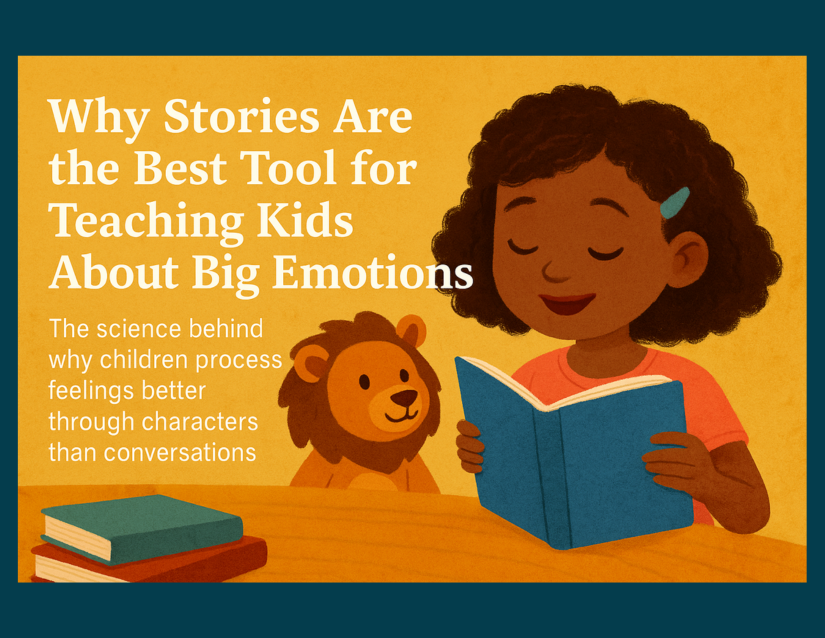
The science behind why children process feelings better through characters than conversations
Have you ever tried to have a direct conversation with a child about their feelings?
“How do you feel about starting kindergarten?” “Fine.”
“Are you worried about anything?” “No.”
“Do you want to talk about what happened at school?” “Can I watch TV?”
Kids aren’t being difficult. They’re being kids. And there’s a much better way to help them process emotions: stories.
Why Direct Questions Don’t Work
When we ask children direct questions about their feelings, several things happen:
First, they often don’t have the vocabulary. Emotions are complex, and naming them requires words many children haven’t learned yet.
Second, direct focus creates pressure. Being put on the spot about feelings can make kids clam up, even if they want to share.
Third, they may not fully understand what they’re feeling. Emotions are confusing! Adults struggle with this too.
Enter: The Power of Story
Stories work differently. When children encounter a character experiencing an emotion, they can observe from a safe distance. They’re not being asked about THEIR feelings. They’re watching Scout feel disappointed or the bumpy pumpkin feel left out.
This distance is actually an advantage. It creates space for processing without defensiveness.
The Science: Mirror Neurons and Emotional Learning
Here’s what’s happening in the brain. When children watch or read about a character experiencing an emotion, their mirror neurons fire. Their brains literally simulate the experience they’re observing.
This means that when Scout feels disappointed about missing the County Fair, children reading the story experience a mini version of disappointment themselves. They practice feeling it in a safe, contained way.
And then they watch Scout navigate that feeling. They see him stomp and huff (validation that these responses exist). They see Luna comfort him (modeling support). They see him find joy anyway (learning resilience).
All without anyone asking them how THEY feel.
Why “Safe Distance” Matters
For children dealing with difficult emotions—anxiety about a new sibling, grief after a loss, fear about a change—direct discussion can feel overwhelming. It brings the feelings too close.
Stories provide a protective layer. “This is about Scout, not about me.” But secretly, subconsciously, it IS about them. And they’re learning without feeling exposed.
In my nursing career, I’ve seen how children use stories to process medical experiences. A child who won’t talk about their own procedure will talk for twenty minutes about how a character in a book felt about going to the hospital.
Same processing. Different entry point.
The Vocabulary Gift
Stories do something else crucial: they give children words.
Before reading Scout’s Rainy Day, a child might not have a way to describe that rumbling, scrunchy feeling when something they wanted doesn’t happen. After reading it, they have “grumpy feeling in his belly” and “face scrunched” and “this is not fair!”
These words become tools. “I feel like Scout when the storm came.” That’s a complete communication that might have taken an hour of questioning to extract directly.
Stories Teach the Full Arc
Life doesn’t come with instruction manuals for emotions. But stories show the whole journey: feeling the feeling, experiencing it fully, and eventually finding resolution.
Scout doesn’t skip from disappointment to joy. He goes through the full arc: excitement → hope → shock → disappointment → anger → sadness → curiosity → engagement → joy.
Children learn that emotions are journeys, not destinations. They learn that big feelings don’t last forever. They learn that there’s usually something on the other side.
How to Use Stories for Emotional Learning
Choose books that match what kids are facing: Starting school? Find books about new beginnings. New sibling? Books about family changes. Disappointment? Scout’s Rainy Day.
Don’t force connections: Let children make their own links. You don’t need to say “This is just like when YOUR plans got cancelled!” They’ll make that connection themselves, and it’s more powerful when they do.
Follow up gently: After reading, you might ask about the character: “Why do you think Scout felt better after playing games?” This keeps the focus on the story while inviting reflection.
Read repeatedly: Children often need to hear emotionally significant stories multiple times. They’re processing in layers. Don’t worry if they request the same book again and again.
Watch for spontaneous references: When children bring up story characters in daily life, they’re using the story to process their own experiences. “I’m like the bumpy pumpkin” is an invitation into their emotional world.
What Stories Can Address
The list is nearly endless, but here are emotions picture books handle particularly well:
Fear and anxiety
Disappointment and frustration
Jealousy and envy
Loneliness and exclusion
Anger and overwhelm
Grief and loss
Excitement and anticipation
Pride and accomplishment
Embarrassment and shame
Love and connection
The Stories I Write
When I create Scout’s adventures or craft The Bumpy Pumpkin, I’m thinking about emotional arcs. What does this character feel? How do they experience it in their body? What helps them? What do they learn?
I want children to see themselves in these characters. To feel understood. To gain tools.
That’s why Scout doesn’t just “get over” his disappointment. He feels it fully, and THEN he finds his way through. That’s realistic. That’s helpful. That’s what children need to see.
Your Role
You don’t need to be a therapist to use stories for emotional learning. You just need to read with children and be open to where the stories take you.
Sometimes a book is just a book. And sometimes it opens a door to a conversation you’ve been trying to have for weeks.
Either way, you’re giving children something precious: the understanding that their feelings are normal, manageable, and part of being human.
And that’s a gift that lasts a lifetime.
Next post: Building a reading culture at home without pressure or perfection…
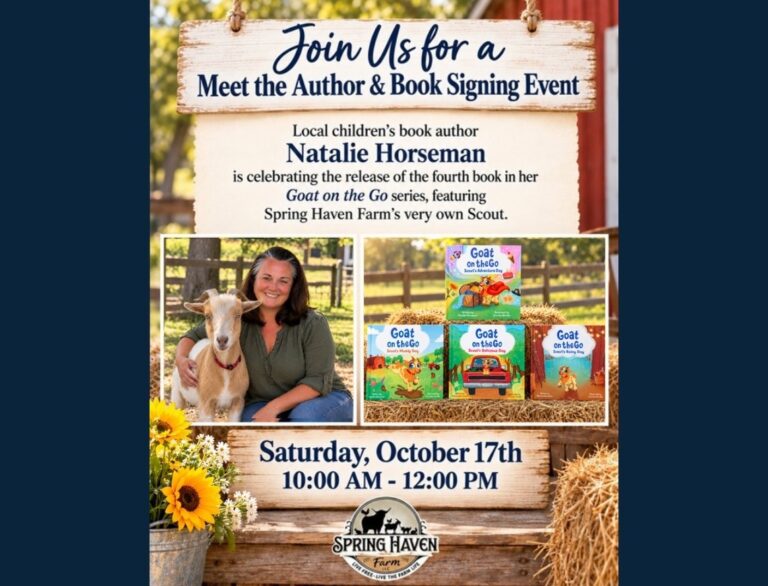 Our Book Launch Party at Spring Haven Farm
 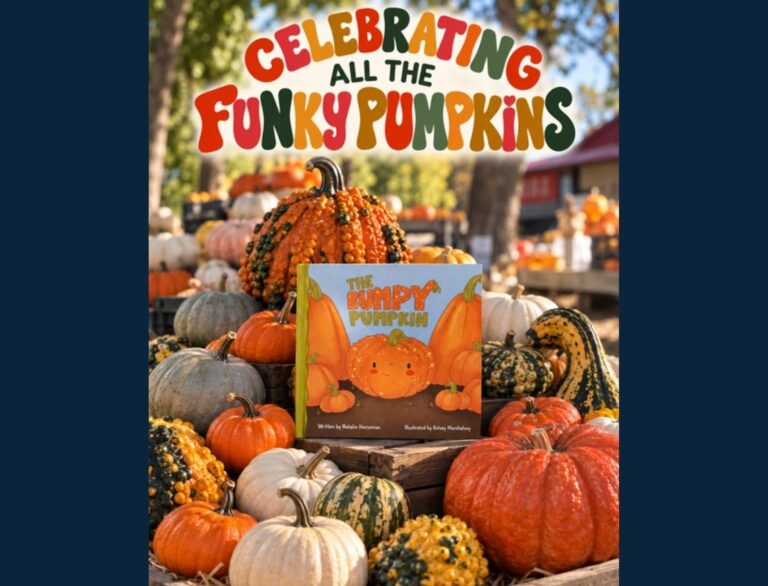 Do You Love Funky Pumpkins?